
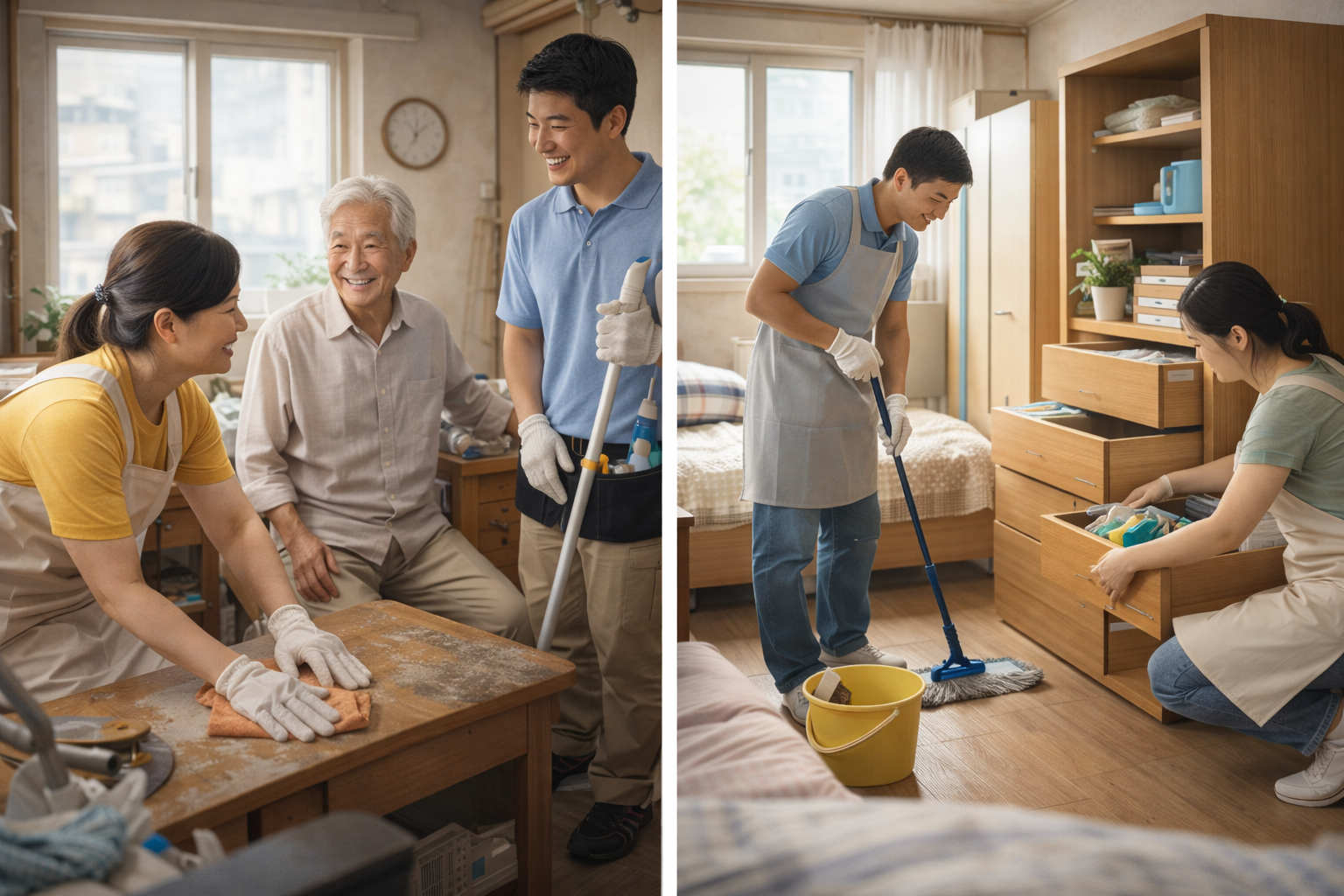
More than cleaning, living environment improvement is emerging as a practical model for sustainability, care, and accessible job creation.
iving environment improvement is no longer just about cleaning or organizing.
Restoring order to a space and improving how it functions can help rebuild the foundation of daily life. What begins inside the home can expand into something much larger—better health, safer routines, stronger communities, and even new forms of meaningful work.
Today, living environment improvement is emerging as more than a household service. It is becoming a practical social model that connects sustainability, care, and employment in everyday life.
1. A Practical Way to Improve the Environment
A disorganized home is more than inconvenient. It can affect hygiene, health, safety, and the overall efficiency of daily living.
When belongings continue to pile up and spaces are not properly managed, people often experience more waste, more stress, and less functionality. Over time, even simple routines become harder to maintain.
Living environment improvement offers a highly practical solution.
By removing unnecessary items, reorganizing space, and keeping only what is truly needed, households naturally reduce waste and improve how resources are used. Unlike large-scale environmental policies or advanced technology, this is a form of sustainability that can be practiced immediately in everyday life.
When a space becomes organized, it becomes easier to manage.
When it becomes easier to manage, it becomes easier to maintain.
And when it becomes easier to maintain, it becomes more sustainable.
This is why living environment improvement should be seen as a real environmental practice—not just a domestic task.
It also has a broader social impact. Cleaner, more organized homes often contribute to healthier neighborhoods, better daily habits, and a more stable living culture overall.
2. More Than Cleaning—A Care System
Another important dimension of living environment improvement is care.
Many households facing difficult living conditions include older adults, people with disabilities, teenagers, or others who need more support in daily life. For them, the home is not just a place to stay—it is the foundation of safety, dignity, and stability.
When the living environment is cluttered or unsafe, the risks increase. Accidents become more likely. Movement becomes harder. Stress builds. And quality of life declines.
This is where living environment improvement becomes a practical form of support.
By creating safer pathways, reorganizing essential spaces, and removing sources of discomfort or risk, it helps restore the conditions people need to live more safely and confidently.
An organized home is not just a cleaner home.
It is a place where people can rest, recover, and regain the strength to move forward.
In this sense, living environment improvement can function as a life-based care system—a form of support that helps people sustain everyday life while also building greater independence over time.
3. A New Pathway for Job Creation
Living environment improvement starts with the home, but its value extends much further. It supports people, strengthens communities, and naturally creates opportunities for work.
This is one of its most important strengths.
The work is practical, visible, and immediately applicable in real-life settings. It offers clear results and meaningful social value. It also creates roles that more people can participate in, with relatively low barriers to entry.
That makes it a strong model for sustainable employment.
It is not simply labor.
It is environmental action.
It is care in practice.
And it is a new way for people to contribute to society through meaningful, hands-on work.
Living environment improvement should no longer be seen as “just cleaning.”
It is a practical system that protects the environment, supports vulnerable lives, and creates accessible jobs—starting with the spaces where everyday life begins.