
Redesigning Space, Rebuilding Daily Life (2)
For many families, improving a living environment is not simply about making a home look better. It is about restoring structure, safety, and stability—especially when the home must support both caregiving and growth.
When a living space becomes overwhelmed by accumulated belongings and inefficient layout, the impact goes far beyond inconvenience. It can disrupt routines, increase stress, and make it harder for family members to focus, learn, and move through daily life with confidence. In these moments, reorganizing a home becomes an essential step toward rebuilding independence and preparing for the future.
2. A Structured Space That Supports Independence
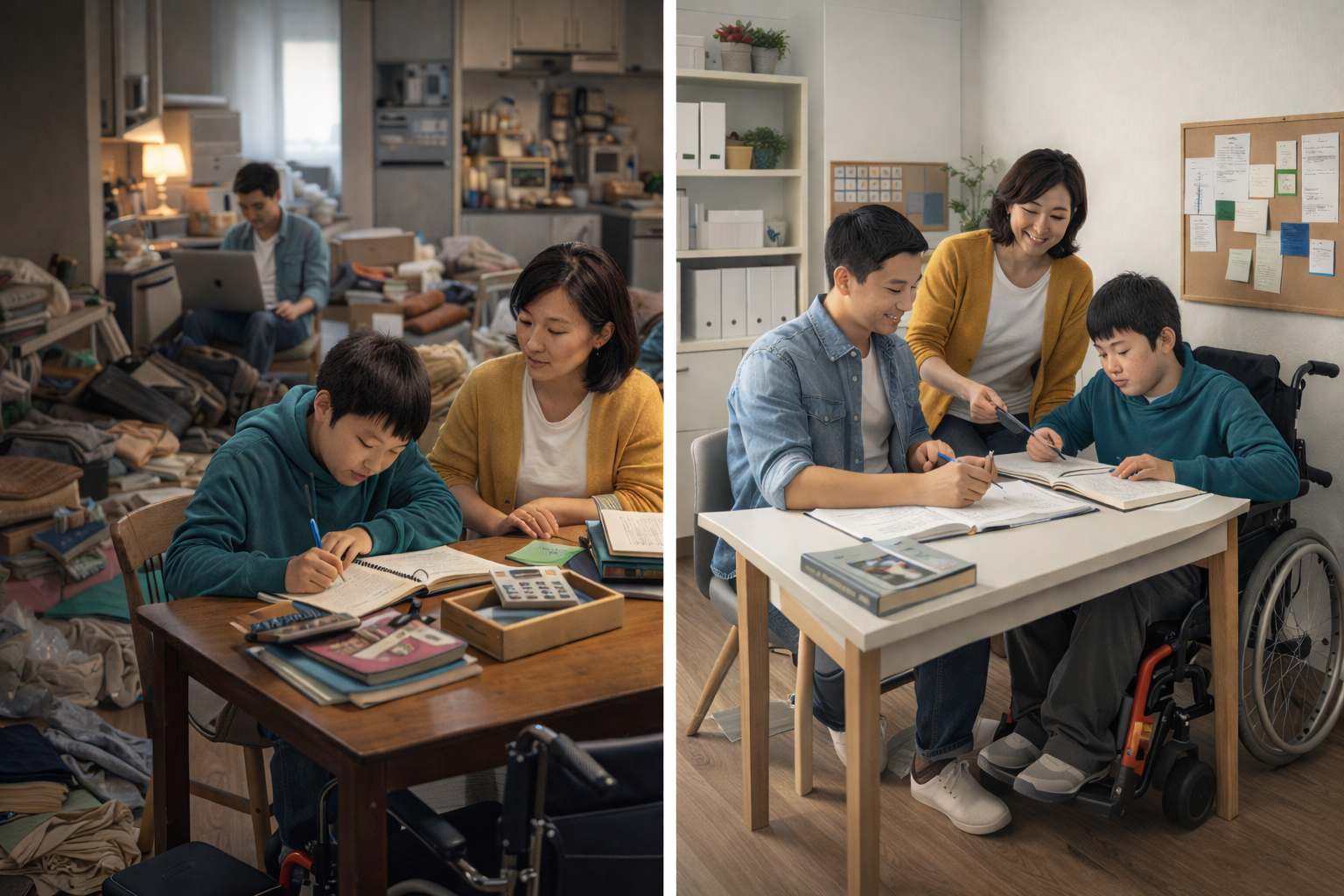
One family, raising a high school senior and another teenage son with a disability, had gradually seen their living environment deteriorate under the pressure of a demanding daily life and ongoing financial responsibilities.
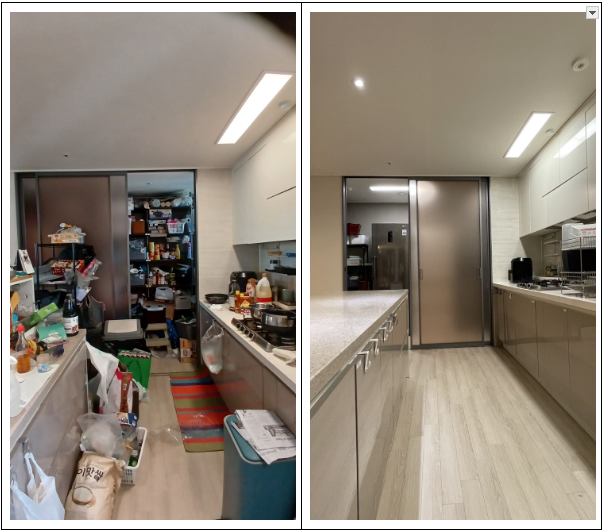
As belongings continued to accumulate and the home’s layout became increasingly inefficient, the physical environment began to place a heavier burden on everyone in the household. For the children—both at an important stage of growth and education—the need for a stable, functional, and supportive environment had become especially urgent.
The living environment improvement process was approached not as a simple cleanup, but as a full redesign of the family’s daily structure.
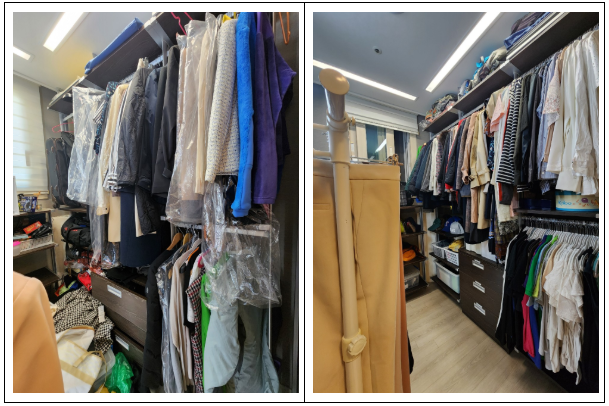
Furniture was carefully rearranged to improve movement throughout the home, and household items were systematically organized to restore the functionality of each space. Particular attention was given to creating a safer and more accessible pathway for the son with a disability, ensuring that mobility within the home became easier, safer, and more dignified.
At the same time, dedicated areas were created to support focused study and learning. For children navigating a critical academic period, the home environment was restructured to become a foundation for concentration, preparation, and future opportunity.
The results extended far beyond convenience.
Within an organized and intentional space, the family began to regain the rhythm of daily life. Stress was reduced. Movement became easier. The home started functioning not as a source of burden, but as a place of support.
More importantly, each family member began to reconnect with a clearer sense of role, direction, and possibility.
What emerged was not only a better living environment, but a meaningful bridge between learning, lived experience, and the long-term process of independence.
In that sense, the transformation of the home became more than a practical improvement.
It became an essential foundation for growth, stability, and the next chapter of family life.
Living environment improvement is not just an outcome—it is a process.
As the foundation of daily life is restored and a structure for independent living begins to take shape, space becomes a vital part of that transformation.
When hidden possibilities begin to emerge and a life that once stood still starts moving again,
the transformation of space becomes the first step on the path toward self-reliance.